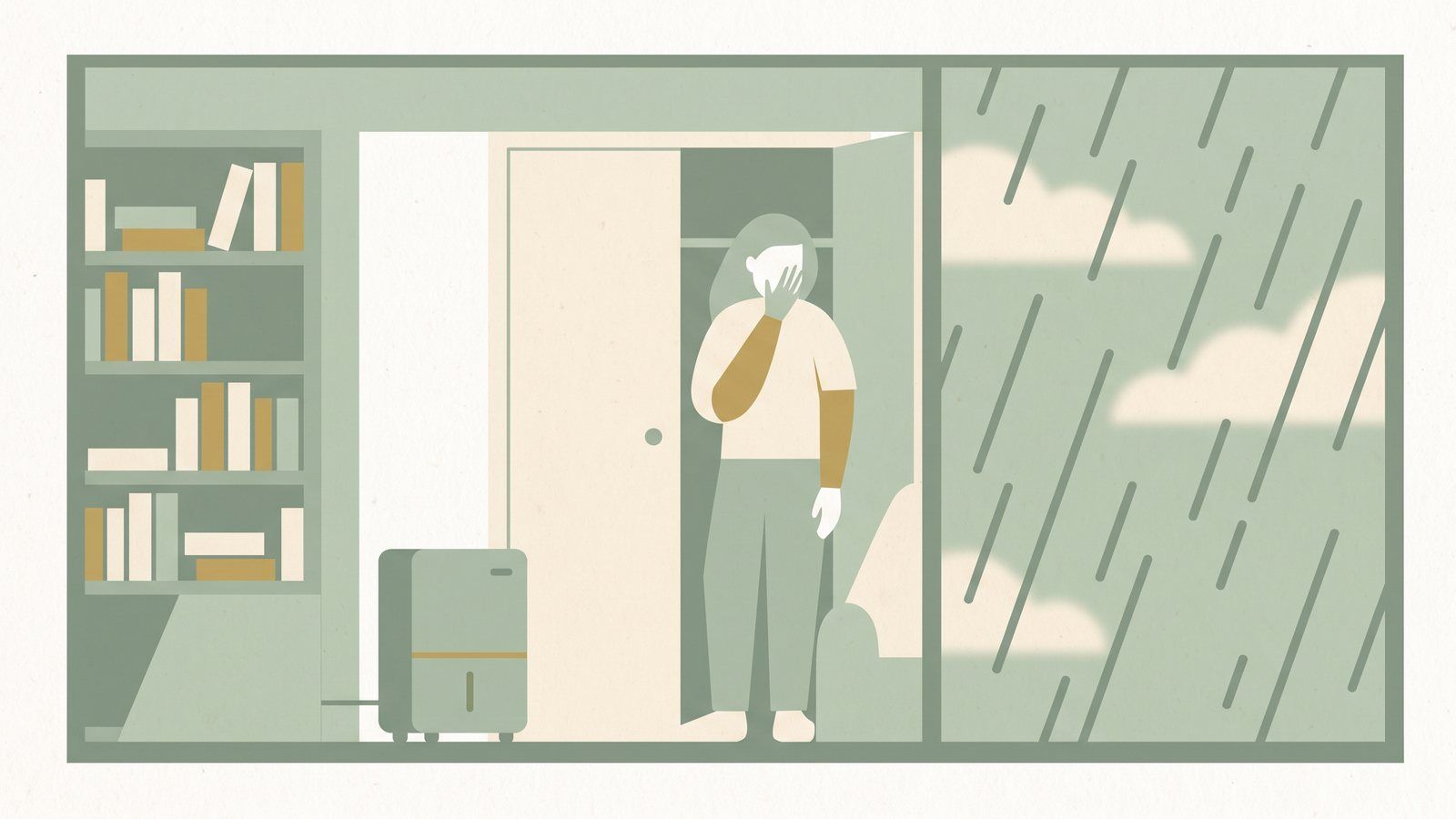
What actually helps a mold allergy in Florida's rainy season is getting indoor humidity below 50 percent, fixing the damp spots the air conditioner creates, and treating the person who is reacting rather than only the sneeze. The afternoon storms that roll through from June into September keep outdoor spore counts high no matter what you do, so the indoor side of the problem is where you have real control.
Why July is the worst month for mold
The pattern is the same nearly every day. Blue sky at breakfast, a wall of cloud building inland by two, an inch of rain between three and five, then steam rising off the pavement on Granada Boulevard as the sun comes back out. The ground never dries. Nights stay above 75 degrees with the dew point not far behind. Mold, which needs moisture, warmth and something to eat, has all three around the clock.
Outdoor spores such as Alternaria and Cladosporium peak in this weather, and they are the ones most often behind seasonal mold allergy. Indoors, Aspergillus and Penicillium take over wherever the house stays damp. Most people I talk to are reacting to some of each.
Where the mold actually lives in a Florida house
People imagine black patches on a ceiling. The everyday sources are quieter than that.
- The air conditioner itself. The coil pulls gallons of water out of the air every day. That water runs down a condensate drain line, and when the line clogs with algae, it backs up into the pan and the closet floor. A musty smell when the unit kicks on is the tell.
- Sweating vents and ducts. Cold metal meets humid air and drips. Check the ceiling around supply registers for faint rings.
- Closets on exterior walls. Still air, cool wall, shoes and cardboard. Beachside condos are especially prone.
- The garage. Unconditioned, often over 70 percent humidity all summer, full of stored fabric and paper.
- Under sinks, behind the washer, shower grout, window tracks. Small, slow, and close to your face every day.
- The car. A cabin that smells like wet gym clothes is blowing spores at you on the commute.
The cold that never ends
A mold allergy rarely announces itself. It shows up as a cold that started in June and is still hanging around on the Fourth of July. Congestion that is worse first thing in the morning. A cough at night once you lie down, from drainage. Sinus pressure behind the cheeks. An itchy roof of the mouth or ear canal. Tiredness that lifts, oddly, on a trip to visit family in a drier state, then returns within a day of walking back through your own front door.
That indoor-worse, away-better pattern is the clue that separates mold from the tree and grass pollens that dominate the rest of the year. Oak season, which I wrote about in why allergies are so bad here in winter, is worse outdoors and on breezy mornings. Mold season is worse in the bedroom.
Practical steps, in the order I would do them
- Buy a hygrometer. A small digital one costs ten or fifteen dollars. Put one in the bedroom and one in the garage and aim for readings under 50 percent indoors. Most people are surprised by the number.
- Set the thermostat fan to auto, not on. When the fan runs continuously, it blows air across a wet coil between cooling cycles and puts moisture back into the house.
- Flush the condensate drain line. A cup of white vinegar down the access pipe near the indoor unit once a month through the summer. An AC technician can show you where it is in five minutes.
- Change the filter monthly from June through September. The three-month schedule on the package is written for a drier climate.
- Run the bathroom fan for twenty minutes after every shower. If the fan is weak or the bathroom has none, crack the door and point a small fan out.
- Put a dehumidifier where the AC does not reach. A 50-pint unit in the garage, or a smaller one in a closet-heavy hallway, changes the number on the hygrometer quickly.
- Get cardboard and fabric off the garage floor, leave closet doors ajar, and pull furniture an inch off exterior walls. Still air is what mold wants.
- Clean small patches, call for large ones. Visible mold under about ten square feet can be scrubbed with detergent and water while wearing a mask and gloves. Bigger than that, or anything after a leak or flooding, belongs to a remediation company.
When an allergist's testing helps
If you have done the above and still feel like you have a permanent cold, a skin-prick or blood test from an allergist tells you whether mold is truly the culprit or whether dust mites, which also love Florida humidity, are doing the work. Those two have overlapping symptoms but different fixes. An allergist can also tell a chronic allergy from a chronic sinus infection, which needs entirely different care.
See a physician promptly, rather than a homeopath, for wheezing or shortness of breath, fever with facial pain, or any significant mold exposure if you are immune-compromised or have a lung condition. Difficulty breathing is a 911 call.
Remedies that come up in damp weather
By the time someone calls me they have usually been through several antihistamines and a nasal spray. Those manage the reaction. Classical homeopathy tries to lower the reactivity itself, by matching a remedy to the whole person rather than to the allergen.
With mold cases I pay attention to how the person relates to damp. Some people are worse in every kind of wet weather, feel it in their joints as well as their sinuses, and have a history of chest colds after getting chilled and wet. Others produce thick, stringy post-nasal drip with pressure at the root of the nose. Others get a bland, streaming discharge with sneezing that stops the moment the storm passes. Each of those pictures points somewhere different. Homeopaths have used remedies such as Dulcamara and Natrum sulphuricum for damp-weather complaints for well over a century.
I ask people to keep whatever their physician has them on; in my experience the need for it tends to shrink gradually rather than vanish. For local readers there is a page on homeopathy for allergies in Ormond Beach and another for Daytona Beach, and the allergy service page covers the approach in general. Everything is by phone or video, and the remedy comes to your mailbox, which in July means nobody has to drive through a downpour to get it.
Start with the hygrometer. If the bedroom reads 62 percent, as a great many Volusia County bedrooms do in July, you have found the first thing to fix.
Questions people ask
Related reading
Talk with a homeopath in Ormond Beach
Francine Kanter, CCH, RsHom(NA), meets with clients by phone or video and mails remedies to your door. Serving Ormond Beach, Daytona Beach, DeLand, Palm Coast, Port Orange, and all of Florida.
Homeopathy is a complementary approach that works alongside your conventional medical care. Francine Kanter is a board-certified classical homeopath, not a medical doctor. This article is educational and is not a substitute for diagnosis or treatment by your physician.