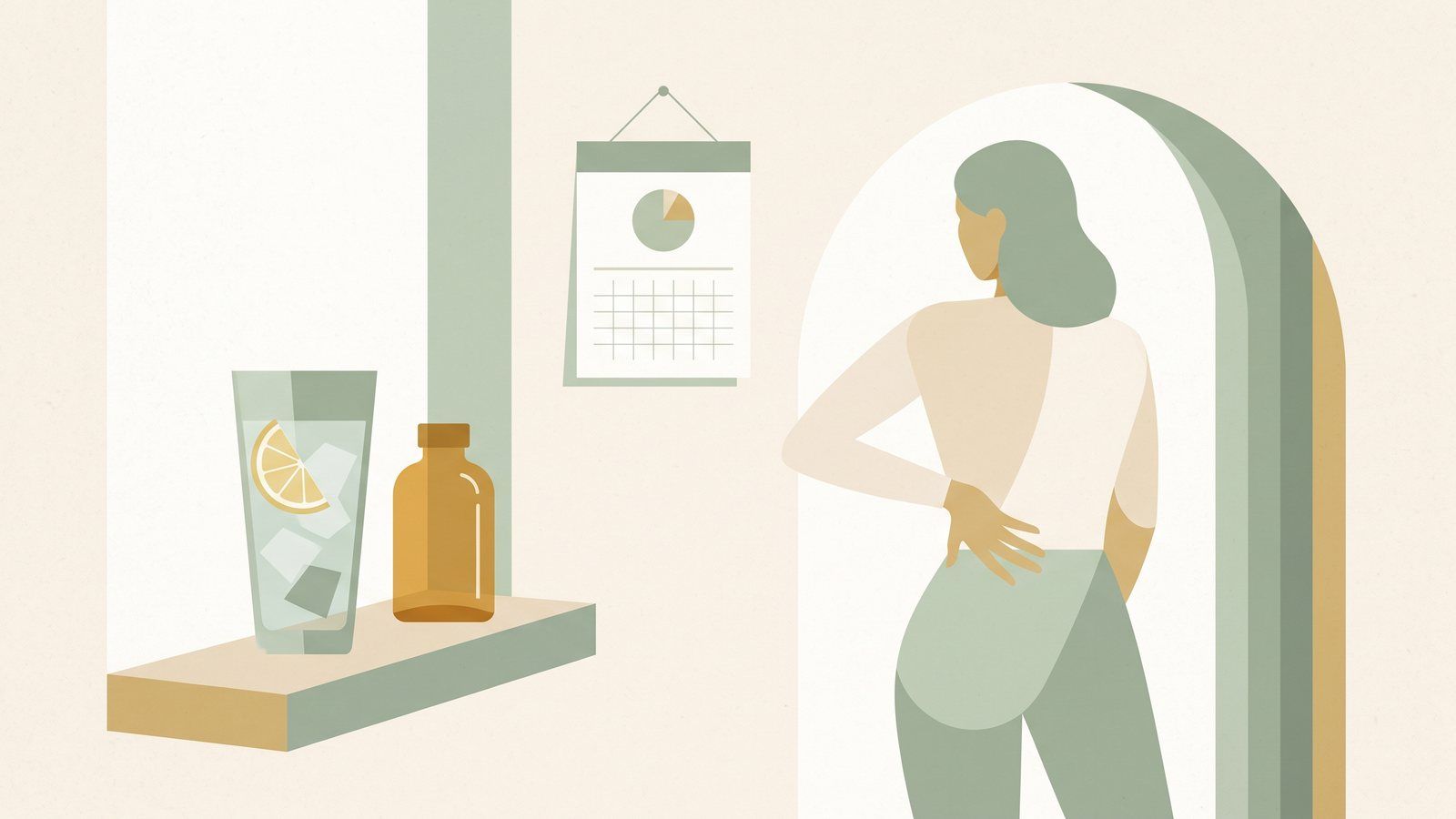
UTIs come back after antibiotics because the antibiotic dealt with the bacteria of that one infection while the conditions that let it take hold stayed put: incomplete emptying, tissue changes after menopause, chronic mild dehydration, or a susceptibility that seems to run in some people. Two infections in six months, or three in a year, is what physicians call recurrent, and it deserves a proper workup rather than another round of the same prescription. Classical homeopathy aims at the recurrence itself, alongside your doctor's care.
First, the symptoms that need a doctor today
Some UTI symptoms are not for waiting on. See a physician the same day, or go to urgent care or the emergency room, if you have a fever or chills, pain in your back or side below the ribs, nausea and vomiting, visible blood in the urine, or if you are pregnant. Those can mean the infection has reached the kidneys. Men with UTI symptoms, children, anyone with diabetes, and older adults who become suddenly confused or unsteady should also be seen promptly. Antibiotics are the right tool for a kidney infection, and homeopathy is not a substitute for them.
Why one antibiotic course often is not the end of it
- Incomplete clearing. A short course knocks the count down enough to relieve symptoms, but a few bacteria remain, sometimes sheltered in the bladder lining, and grow back within weeks. This is more likely when the antibiotic was chosen without a culture.
- Not emptying fully. Bladder prolapse, an enlarged prostate, constipation pressing on the bladder, or the habit of holding it all leave urine behind, and standing urine is where bacteria multiply.
- Changes after menopause. Lower estrogen thins the tissue around the urethra and shifts the vaginal flora away from the protective lactobacilli. Many women who never had a UTI in their forties start getting them in their sixties for this reason alone. It is worth asking your gynecologist whether a local treatment for that tissue change is appropriate for you.
- Dehydration. By mid-April in Volusia County the afternoons are already in the low eighties, and people who spend the day on the golf course or at the beach drink less than they lose. Concentrated urine irritates the bladder and flushes it less often.
- The antibiotic itself. Each course also thins the healthy bacteria in the gut and vagina that normally crowd out the troublemakers. Some women notice a yeast infection follows every antibiotic, and a UTI follows the yeast infection.
- Susceptibility. Some people simply get them. Family history plays a part, and so, in my observation, does a long stretch of stress or grief that seems to lower resistance across the board.
What to ask your physician before the next prescription
Ask for a urine culture, not just a dipstick, so the antibiotic matches the organism. Ask whether a post-void residual test makes sense, to find out if you are emptying. If you are past menopause, ask whether the tissue changes that come with it are part of the picture. If infections follow intercourse, say so plainly, because it changes the advice. None of this is homeopathy. It is the groundwork that makes any approach work better.
Hydration, cranberry and D-mannose: what the evidence supports
Drinking more water has reasonable support for reducing recurrences in women who were not drinking much to begin with. Cranberry products have mixed evidence; some studies find a modest reduction, others find nothing, and sweetened juice is not the same as the concentrated capsules. D-mannose has been popular for a decade and the trial evidence is also mixed. None of these are harmful for most people, and none of them are reliable enough to skip the workup above. If you take a blood thinner, check with your prescriber before adding cranberry.
What a homeopath asks that urgent care did not
A homeopath is not trying to kill bacteria. I am trying to understand why this person keeps becoming the place where bacteria settle, and to choose a remedy that fits the whole pattern. When someone books a consultation for recurrent UTIs in Ormond Beach, or by phone from anywhere in Florida, the questions run in a different direction from the ones at urgent care:
- The exact character of the discomfort: burning before, during or at the very end of urination; constant urging with little result; pain that lingers after.
- Triggers: intercourse, holding urine on long drives, a cold wet bathing suit, a stretch of poor sleep, antibiotics for something else.
- Your emotional state around the time the pattern began. Homeopaths pay attention to this, and I will ask.
- Everything else: sleep, digestion, temperature, thirst, menopause, medications.
A few remedies show up regularly in recurrent cases. Cantharis is the classical description of intense burning and constant, almost frantic urging. Staphysagria fits infections that follow intercourse or a catheter, in someone who tends to keep their feelings down. Sarsaparilla is known for pain that peaks right at the end of urination.
I wrote more about the acute side in an earlier post on homeopathy for UTIs, and the UTI service page covers my approach in general.
What progress looks like over a few months
With recurrence, the measure is frequency. If you were having an infection every six weeks, the first good sign is ten weeks without one, then a season. I schedule the first follow-up four to six weeks out and adjust from there. You keep your physician, keep your cultures, and keep antibiotics available for the infection that needs them. The goal is to need them less often.
Questions people ask
Related reading
Talk with a homeopath in Ormond Beach
Francine Kanter, CCH, RsHom(NA), meets with clients by phone or video and mails remedies to your door. Serving Ormond Beach, Daytona Beach, DeLand, Palm Coast, Port Orange, and all of Florida.
Homeopathy is a complementary approach that works alongside your conventional medical care. Francine Kanter is a board-certified classical homeopath, not a medical doctor. This article is educational and is not a substitute for diagnosis or treatment by your physician.