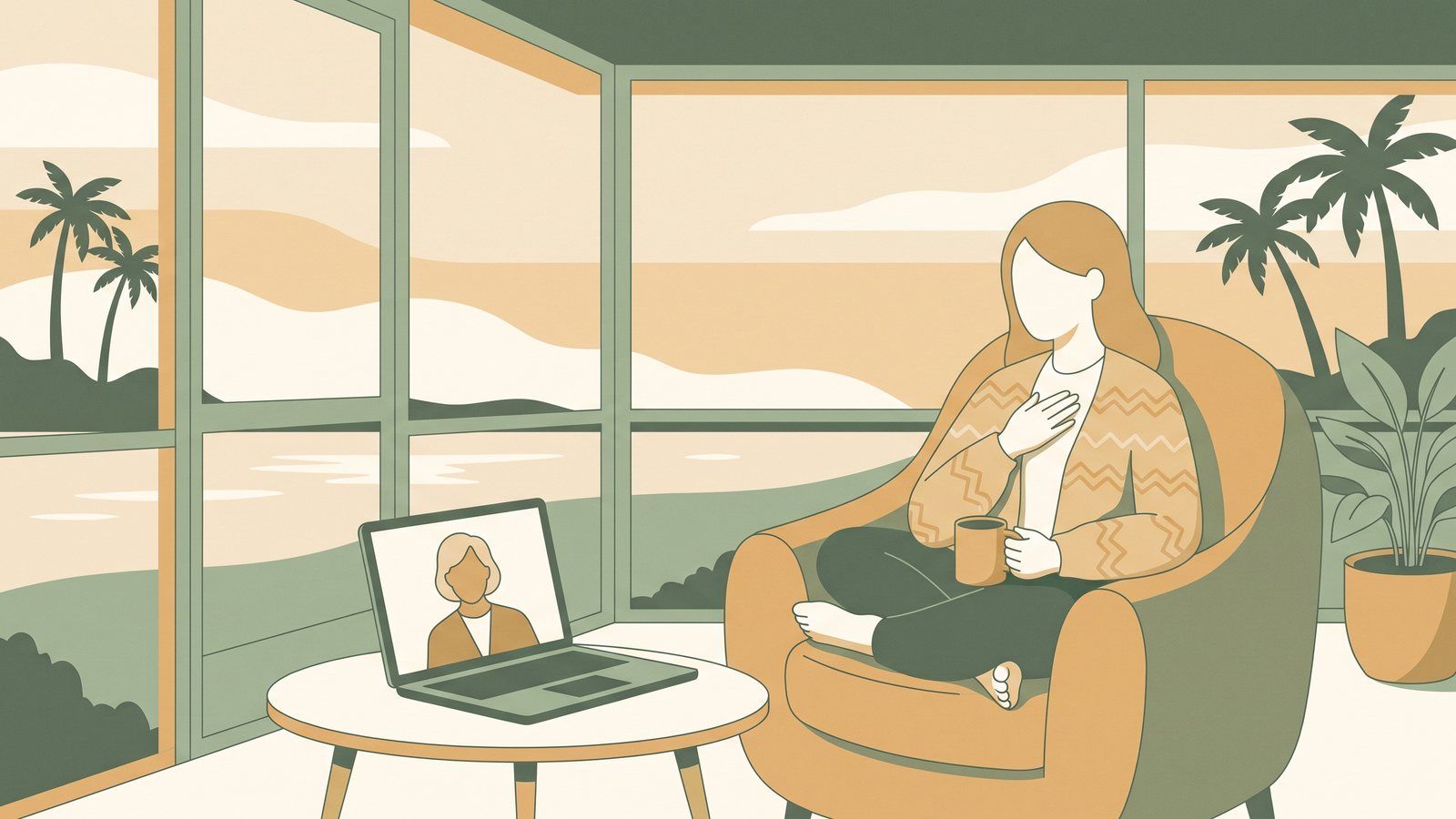
Homeopathy can be part of how you manage anxiety, as an addition to therapy, medication and your doctor's care, never in place of them. A classical homeopath does not treat "anxiety" as one thing; I look at the particular shape of yours, along with sleep, body and history, and choose one remedy to fit the whole picture. The scientific evidence for homeopathy in anxiety is thin, and I would not ask anyone to rely on it alone. What clients describe, when it helps, is that worry loosens its grip gradually over a few months.
If you are in crisis, start here
If you are thinking about harming yourself, or anxiety has become panic that will not settle, call or text 988, the Suicide and Crisis Lifeline, or go to the nearest emergency room. Chest pain, shortness of breath or a racing heart should be checked by a doctor before anyone assumes it is anxiety, because heart and thyroid problems can feel exactly the same. Homeopathy is for the longer work, once you are safe.
Why late fall is hard for a lot of people
The clocks go back on November 1, and soon it will be dark before six. Hurricane season ends on paper at the end of November, but many households in Volusia County are still settling insurance claims or roof repairs from storms past. Then the holidays: family arriving, family not arriving, money, the first season without someone. Snowbirds are arriving, the roads are getting busier, and quiet routines go. None of that is a diagnosis. It is the background I hear in a lot of calls this time of year, and it is part of what I ask about.
How a homeopath reads anxiety differently
A doctor or therapist usually asks how much anxiety you feel, how often, and how much it interferes with life. Those are the right questions for their work. I ask what the anxiety is like. These are some of the patterns classical homeopathy distinguishes, with the remedies traditionally associated with each:
- Dread before an event. The job interview, the flight, the doctor's appointment. The person is hurried, often has digestive upset beforehand, and is fine once it is over. Argentum nitricum is the classic picture.
- Going weak and shaky. Rather than racing, the anxiety drains: trembling, heavy limbs, wanting to be left alone. Gelsemium is often considered here.
- Worry that will not let go. Health, money, whether the door is locked. Restless, meticulous, chilly, worse around midnight. Arsenicum album fits many of these people.
- Sudden, intense fear. Panic that comes on out of nowhere, sometimes after a shock, with a certainty that something terrible is about to happen. Aconite is the remedy associated with this.
- Anxiety braided with grief. Sighing, a lump in the throat, mood that swings. Ignatia is a common thought, especially when a loss is recent.
These are illustrations, not a menu. The remedy that fits you depends just as much on how you sleep, what you crave, whether you run warm or cold, and what was happening in your life when the anxiety started. That is why the first consultation is long and thorough, and why the remedies on a pharmacy shelf rarely match a lifelong pattern.
What the evidence does and does not show
Clinical trials of homeopathy for anxiety are few and small, and the reviews that pool them have not found convincing evidence of an effect beyond placebo. I say that plainly because you deserve to know it before you spend money. Therapy, especially cognitive behavioral therapy, has strong evidence for anxiety, and so do several medications. If you have not tried those, I will encourage you to talk with your doctor about them, whatever else you decide.
Why do people come to me anyway? Most already see a therapist or take medication and feel it has helped part of the way. Some have side effects they would like to need less of, through their prescriber. Others want care that looks at sleep, digestion, the body and the history together, rather than the anxiety alone. In my experience that whole-person attention is part of what clients value, whatever one believes about the remedy.
What a first consultation covers
It happens by phone or video, which many anxious clients find easier than a waiting room. We go through the anxiety itself in detail, then everything around it: sleep, appetite, temperature, energy through the day, family history, and the events of your life. Bring a list of your medications and the name of your prescriber. If anything you tell me needs a physician or a therapist, I will say so. The first consultation post walks through the format, and the virtual consultation page explains how remedies are mailed.
What changes first
In longstanding anxiety the early signs are often indirect: falling asleep more easily, waking less at three in the morning, a worry that used to spiral running out of steam sooner. The anxiety itself tends to soften later. I wrote about the low mood that often travels with anxiety in homeopathy and depression. If you try nothing else this month, keep a short note each night of how you slept and what you worried about. Whoever you end up working with, a therapist, your doctor or me, will learn more from two weeks of those notes than from any questionnaire.
Questions people ask
Related reading
Talk with a homeopath, from home
Francine Kanter, CCH, RsHom(NA), meets with clients by phone or video and mails remedies to your door. Serving Ormond Beach, Daytona Beach, DeLand, Palm Coast, Port Orange, and all of Florida.
Homeopathy is a complementary approach that works alongside your conventional medical care. Francine Kanter is a board-certified classical homeopath, not a medical doctor. This article is educational and is not a substitute for diagnosis or treatment by your physician.