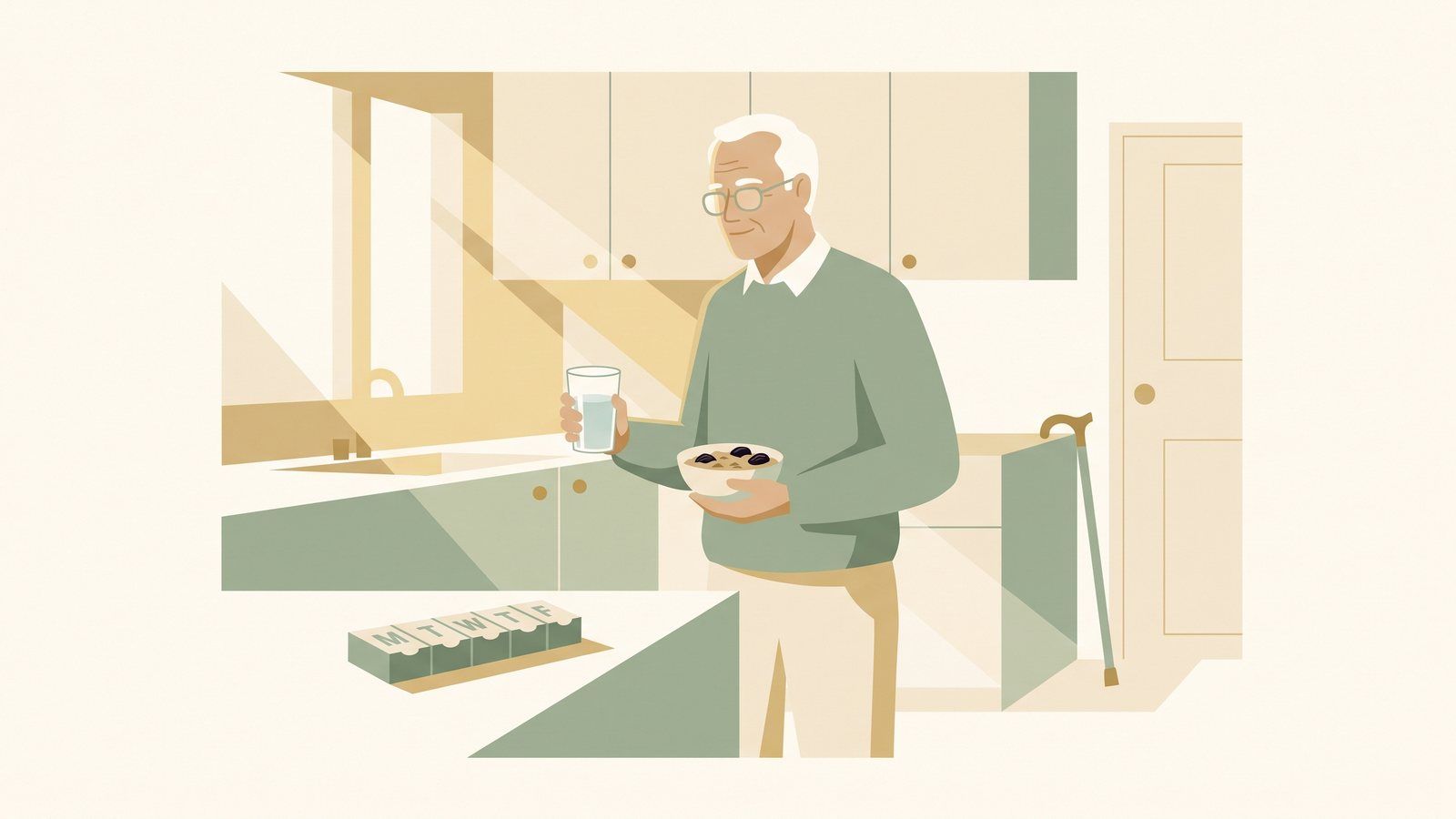
Laxatives stop working in older adults mostly because the causes of the constipation keep piling up underneath them: new medications that slow the bowel, chronic mild dehydration, less walking, weaker pelvic floor muscles, and a colon that has grown used to being prodded by a stimulant every night. Switching laxatives helps for a while. Sorting out which of those causes are at work in your case, and in what proportion, tends to help for longer.
Red flags first: when constipation needs a doctor
See your physician promptly if you have blood in the stool or on the paper, black or tarry stool, unexplained weight loss, constipation that is new and persistent after age 50, severe abdominal pain, or vomiting. Go to the emergency room if you have not passed stool or gas and your abdomen is swollen and painful, which can signal a blockage. Each of these calls for an examination before anything else is tried. Most constipation in older adults is not dangerous, but the exceptions matter, and a colonoscopy when your doctor recommends one is part of taking care of yourself.
Why the bowel slows after 65
Ormond Beach has a great many residents in their seventies and eighties, and constipation is one of the most common reasons they call me. It rarely has a single cause. More often it is four or five modest ones stacked together.
- Medications. Opioid pain relievers are the most reliable constipators there are, and they are prescribed often after joint replacements and for back pain. Calcium channel blockers for blood pressure (verapamil especially), diuretics, iron supplements, calcium supplements, aluminum antacids, and anything anticholinergic (certain bladder medications, older antidepressants such as amitriptyline, and diphenhydramine, which is in most over-the-counter sleep aids) all slow the bowel. Many people take three of these at once.
- Dehydration. The sense of thirst dulls with age. Add a diuretic, a June afternoon in the low nineties, and air conditioning pulling moisture out of the indoor air, and a person can be a quart short every day without feeling it. The colon compensates by pulling more water out of the stool, which is exactly what you do not want.
- Less movement. Walking moves the bowel. A knee that hurts, a summer too hot to walk after nine in the morning, and a day organized around sitting all take that away.
- Pelvic floor changes. In a surprising number of older adults the trouble is not that stool moves too slowly but that the muscles meant to relax during a bowel movement tighten instead. No laxative fixes that. A pelvic floor physical therapist can, and it is worth asking your doctor for a referral if straining is the main complaint.
- Other conditions. Low thyroid, diabetes, Parkinson's disease and depression all slow transit. So does a diet that has quietly lost its fiber because chewing is harder or cooking for one feels like too much trouble.
Stimulant laxatives and the problem of tolerance
Senna and bisacodyl (Senokot, Dulcolax, Ex-Lax) work by irritating the bowel wall into contracting. They act fast, which is why people love them. But many people find that the dose that worked at first does less after months of nightly use, and they climb from one tablet to two to four. Whether the bowel is truly damaged by long-term stimulant use is debated among gastroenterologists. What is not debated is that a bowel that only moves when irritated has stopped doing its own work. If you have been on a nightly stimulant for years, do not stop abruptly and do not double up. Talk to your prescriber about a plan.
| Type | Examples | How it works | What to know |
|---|---|---|---|
| Stimulant | Senna, bisacodyl | Irritates the bowel wall to trigger contractions | Fast; can cramp; the dose often creeps up over time |
| Osmotic | Polyethylene glycol (MiraLAX), magnesium citrate, lactulose | Draws water into the stool | Gentler; needs adequate fluid; magnesium products need care with kidney disease |
| Bulk-forming | Psyllium (Metamucil), methylcellulose | Adds fiber that holds water | Must be taken with a full glass of water or it can make things worse |
| Stool softener | Docusate (Colace) | Lets water into the stool | Weak evidence; often does little on its own |
What helps that does not come in a bottle
- A glass of water when you wake and one with each meal, before you feel thirsty. Coffee counts in the morning; it is a mild bowel stimulant in its own right.
- A short walk in the coolest part of the day, even ten minutes around the block or along the river at Cassen Park.
- Sitting on the toilet for a few minutes after breakfast, feet raised on a small stool, without straining. The bowel has a morning reflex and it responds to being given the chance.
- Fiber from food: prunes, pears, oatmeal, beans, cooked greens. Adding it gradually, with water, prevents the bloating people blame on fiber.
- A medication review with your pharmacist or physician. Ask directly which of these could be constipating you and whether there is an alternative. Do not stop or change anything on your own.
The constipation questions a busy practice skips
When someone in their late seventies comes to me after years of laxatives, I am not looking for a homeopathic laxative. I am trying to understand this person's constipation as a whole, and the details that separate one case from another are the ones a busy practice rarely has time for. Someone who books a consultation for constipation in Ormond Beach will be asked about the urge (is it absent, or present but ineffective?), the stool itself (dry and hard, or soft but still difficult to pass?), what the person eats and drinks and when, how they sleep, what they worry about, and how their digestion behaved thirty years ago.
Homeopaths describe remedies by the whole pattern they fit, and a few of those patterns turn up again and again in this age group. Nux vomica fits frequent, unsatisfying urging in someone sedentary, driven, fond of rich food and coffee. Bryonia fits large, dry, hard stool with no urge at all, in a person who is thirsty for long drinks and short-tempered. Alumina is classically described for older adults where even a soft stool requires great effort because the bowel seems to have lost its push.
I also pay attention to the anxiety that gathers around constipation itself. People begin to dread the bathroom, plan their day around it, and the tension makes the problem worse. One of my case studies, a child's fear of constipation, shows how much that emotional layer can matter, and it is no less true at eighty than at eight. The constipation service page explains the approach more fully.
What the first weeks usually look like
Constipation that has built up over years usually begins to change within four to eight weeks of the right remedy, and the first sign is often modest: a returning urge, or less straining, or simply less thought given to the whole subject. The first follow-up comes four to six weeks later, and the remedy is mailed to you after the consultation. Everything is by phone or video, so there is no drive in the heat and no waiting room. Keep the MiraLAX in the cabinet in the meantime. Nobody is asking you to be a hero in June.
Questions people ask
Related reading
Talk with a homeopath in Ormond Beach
Francine Kanter, CCH, RsHom(NA), meets with clients by phone or video and mails remedies to your door. Serving Ormond Beach, Daytona Beach, DeLand, Palm Coast, Port Orange, and all of Florida.
Homeopathy is a complementary approach that works alongside your conventional medical care. Francine Kanter is a board-certified classical homeopath, not a medical doctor. This article is educational and is not a substitute for diagnosis or treatment by your physician.